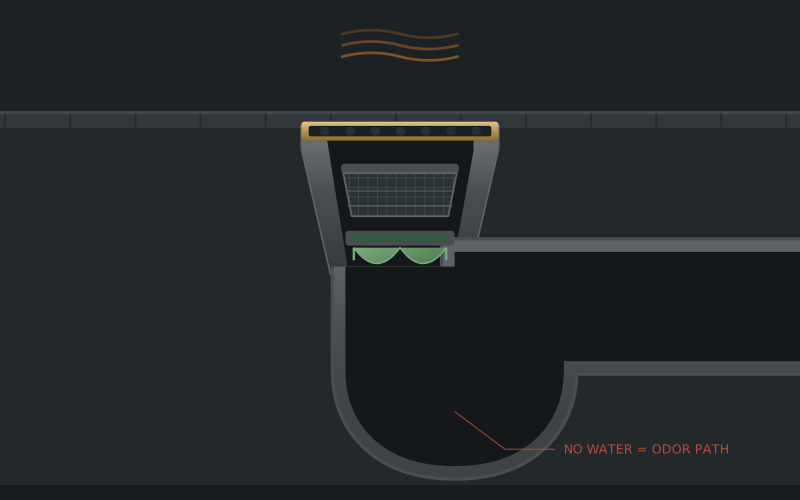
A drain that smells but still flows at full speed is the easiest fault on this site to diagnose, because it rules out the blockage. Water is moving freely. What is moving with it is air from the soil pipe, and the only thing that should be stopping that air is a seal.
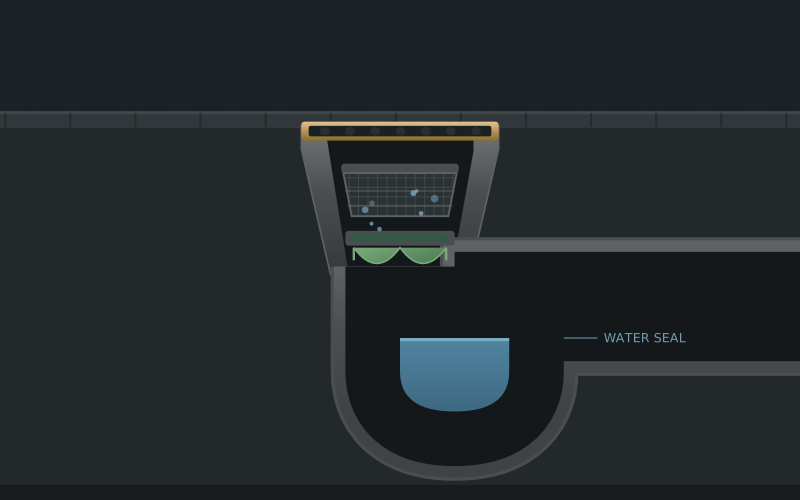
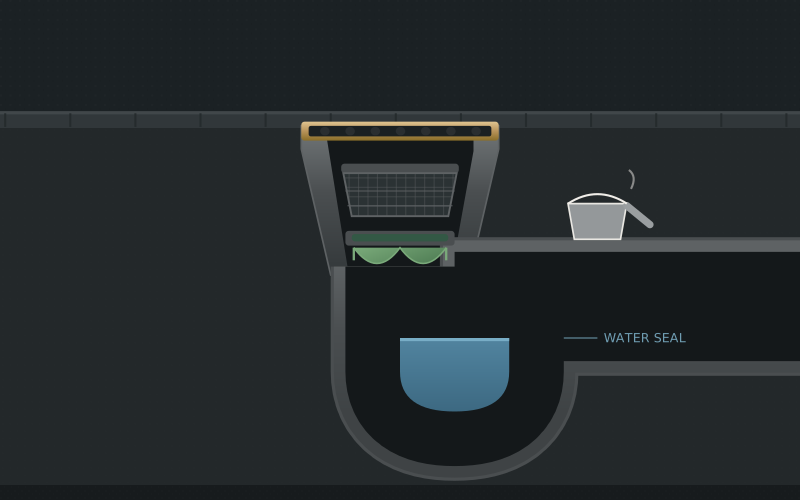
There are two kinds of seal in a modern floor drain: a water seal sitting in the dip of the trap, and a mechanical seal — a silicone flap or a duckbill valve. Either one can fail, and they fail in different ways. The cup test tells you which.
What the cup test actually proves
If the smell disappears and stays away for days, the trap was dry. Water had evaporated from the dip — normal in a guest bathroom, a utility drain or a shower nobody has used since the last holiday. The fix is a jug of water and a note to run the tap occasionally.
If the smell is back within a day, water is not the problem. Something is draining your seal: a siphon pulling it out through a blocked vent, or a mechanical seal that no longer closes. That is when you lift the cover.
Reading the seal once you can see it
A healthy silicone flap lies flat across the bore and springs back when you lift it with a finger. A failed one is curled at the edges, stiff, or torn at the hinge. A duckbill valve should close completely; if the lips are stuck open by hair or limescale, air walks straight past it.
If there is no seal at all, someone removed it — usually during a renovation or a deep clean — and never put it back. That is more common than it sounds, and it is a five-dollar part.
When to stop and fit a valve instead
If the drain is in a room you rarely use, a water seal will keep drying out no matter how many times you top it up. A one-way silicone valve solves that permanently: it opens under the weight of water and closes against air, so there is nothing to evaporate.
Check the bore diameter and the clear depth before buying. A valve that sits proud of the grate will not let the cover seat, and one that is too deep will not seal against the pipe wall.
Step by step
Each step is one picture. The hotspot marks the part you touch; the caption is the whole instruction.
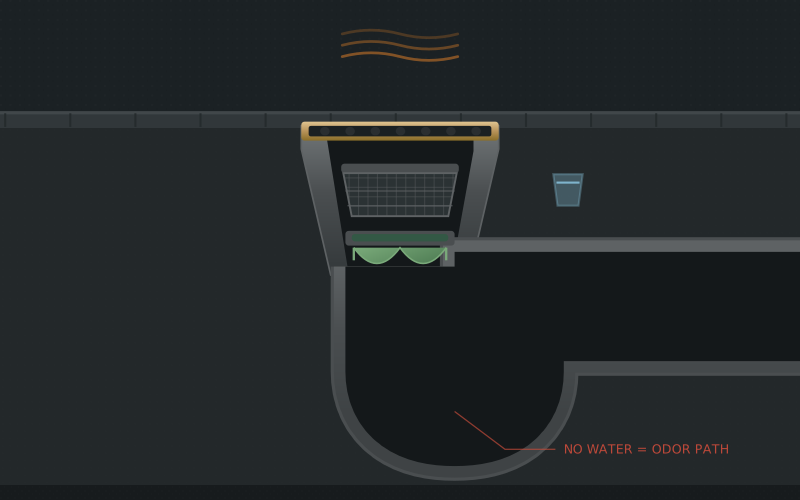 Grate opening
Pour one cup of water straight down the drain.
 Trap water level
LOOP · Water level rising · 3 frames
If the smell stops, the seal was simply dry.
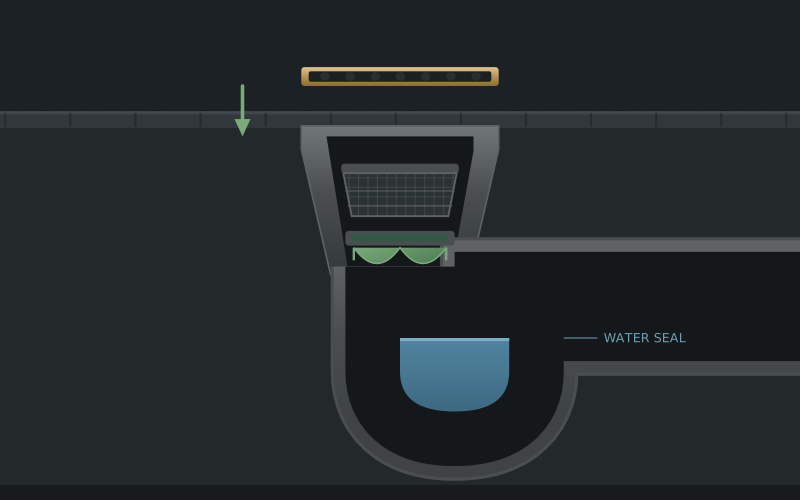 Silicone seal
Lift the cover and find the seal insert.
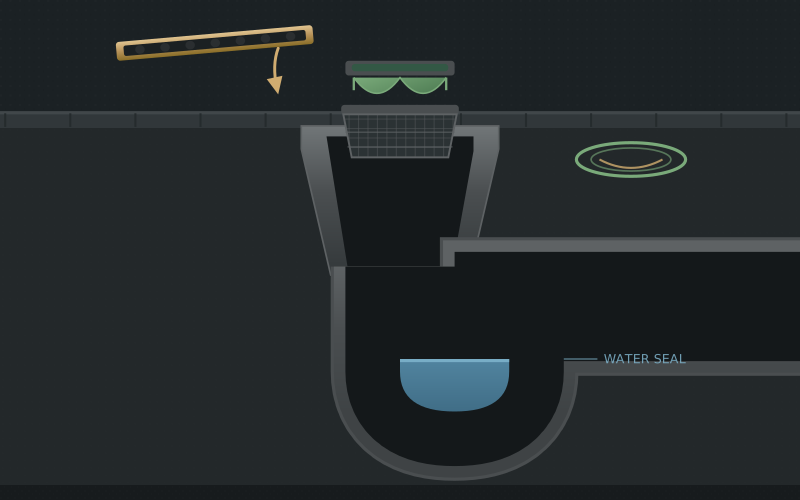 Removed insert
If it curls or tears, the seal is finished.
 New seal seated
Fit the new insert and run the tap for a minute.
What not to do
These are the four ways a ten-minute job turns into a call-out. Every one of them is a red-bordered figure for a reason.
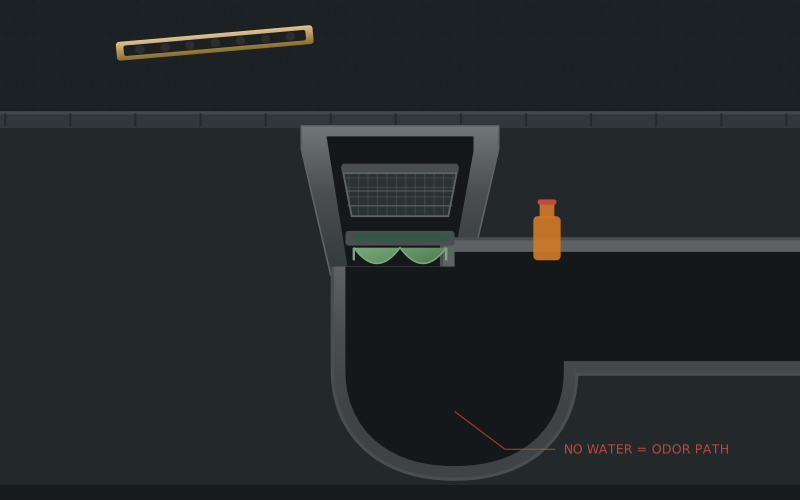 DON'T
Don't pour chemicals at a smell. There is no blockage to dissolve.
Before you close the page
The 30-second version
Cup of water. Smell gone = dry trap. Smell back tomorrow = replace the seal.
Do not mask it
Bleach and air fresheners hide the symptom for a day. The gas is still coming up, and it is still coming into the room.
Unused drains
A trap loses roughly 25 mm of water a week in dry air. Run the tap for ten seconds a week in rooms you do not use.
Related guides
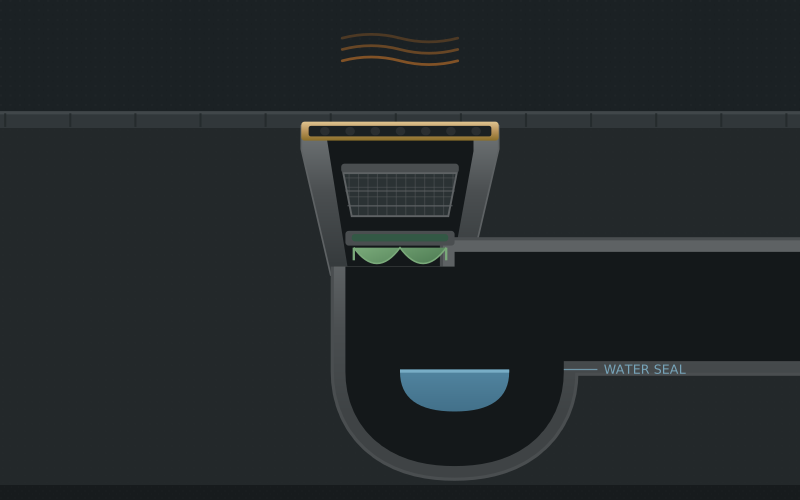
Gurgling Drains: Why They Happen and How to Stop Them
The gulp is air being pulled through water. Find out where the air should have come from, and the noise stops.
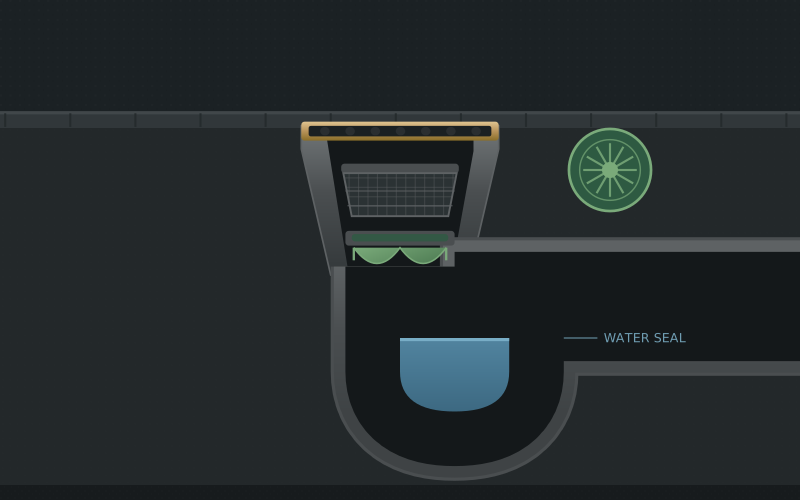
The $5 Fix: Installing a Silicone Drain Cover and One-Way Valve
Two parts, ten minutes, no tools. This is the highest-return job on the whole site.
The 5-Minute Weekly Drain Routine That Prevents Everything
Three habits, five minutes a week. Every problem on this site starts with one of them being skipped.
Safety
Wear gloves and eye protection. Ventilate the room. Never mix chemical cleaners — bleach plus caustic cleaner releases chlorine gas. Trap contents are grey water and may carry bacteria. If water backs up in more than one drain, or you smell gas, stop and call a licensed plumber.