Standing water means the blockage is downstream of the trap, where your hand and a hook cannot reach. Before you buy an auger, run the three tests below — they tell you whether the blockage is close and soft, or far and hard.
The distinction matters because the tools are different. A soft blockage in the trap arm yields to a plunger and a 5 m spring auger. A hard blockage in the branch line needs a machine, and a main-line blockage needs a professional before you make it worse.
Test one: does plunging move the level?
If the water rises and falls with each stroke, the blockage is close and at least partly soft. Work it for five strokes, then release and watch. A level that drops means you have shifted it; a level that snaps back means it is compacted.
If the plunger does nothing at all — no movement, no sound — the blockage is hard or far away. Stop plunging. You are pressurising joints for no benefit.
Test two: is more than one drain slow?
Fill a sink and a shower at the same time, then drain both. If both are slow, the blockage is in the shared branch or the main line, and no amount of work at the floor drain will fix it.
Multiple slow drains plus a sewage smell anywhere in the house is the point to call a plumber. That combination means the main line, and a machine in the wrong hands can crack a clay line.
Test three: does it come back?
A blockage that returns within a week was never fully cleared, or something is being flushed that should not be. Recurrence at the same point usually means a rough joint or a root. That is a camera job, not a snake job.
Step by step
Each step is one picture. The hotspot marks the part you touch; the caption is the whole instruction.
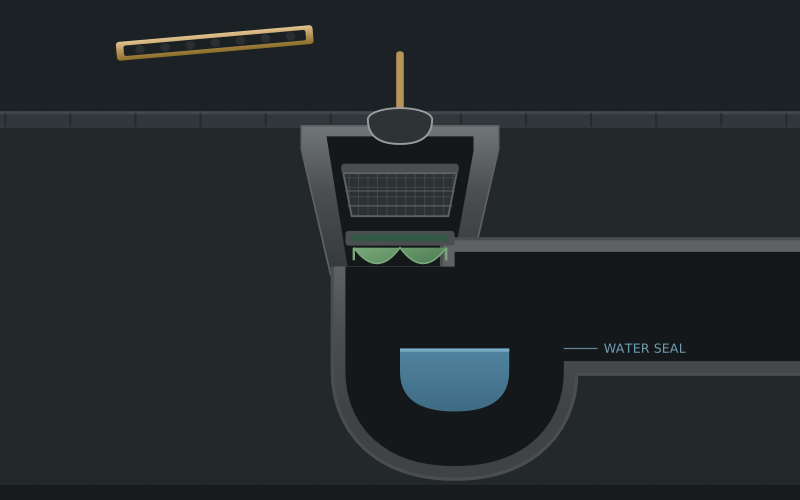
 Standing water
Bail the water out so you can see the blockage.
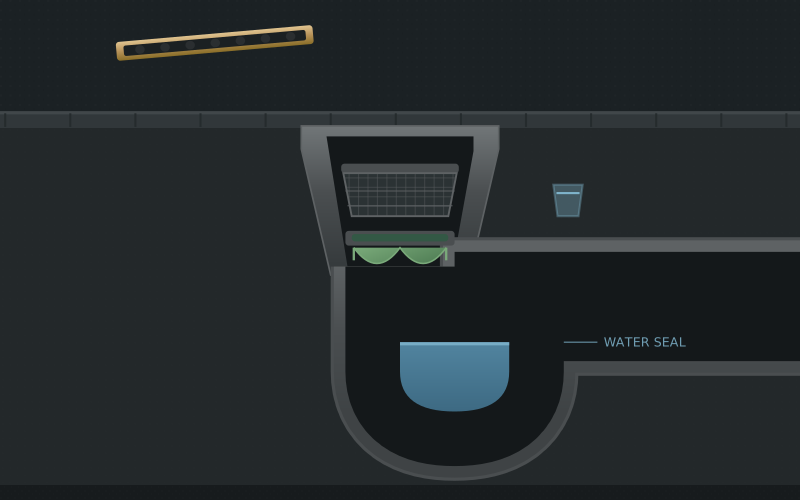
 Cup seal
LOOP · Plunger stroke · 2 frames
Seal the overflow, then plunge five firm strokes.
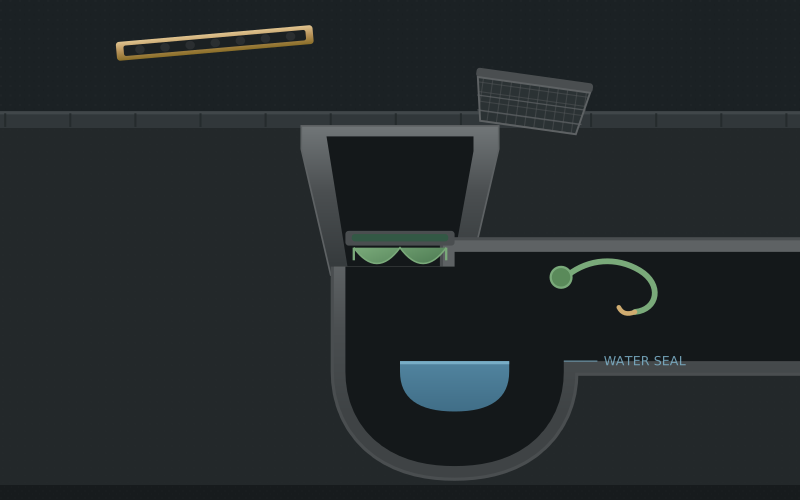 Auger head
Feed the auger slowly. Stop when it grabs.
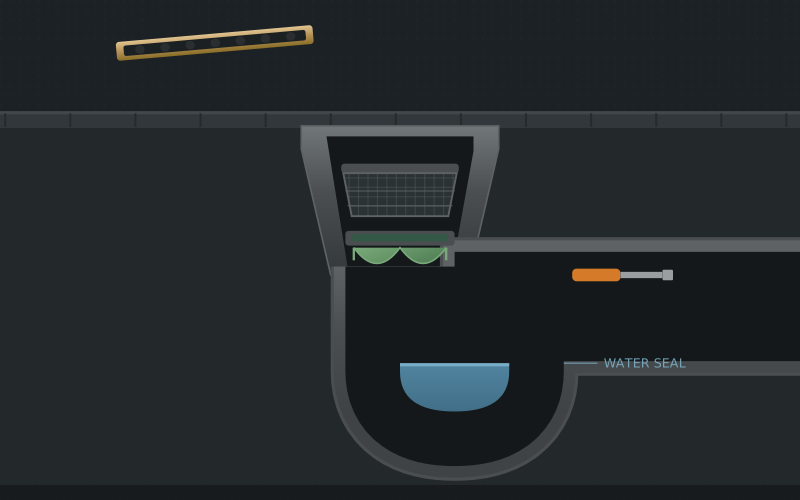 Trap plug
Open the trap plug only with a bucket underneath.
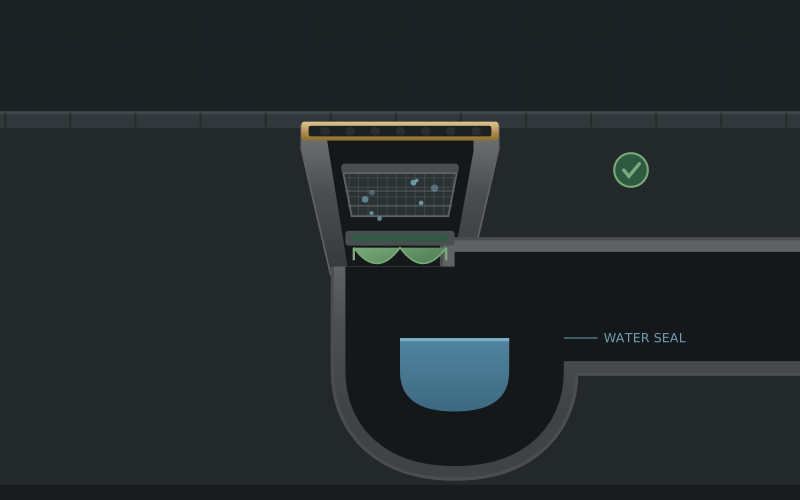 Free flow
Water should leave with a clean swirl, no gurgle.
What not to do
These are the four ways a ten-minute job turns into a call-out. Every one of them is a red-bordered figure for a reason.
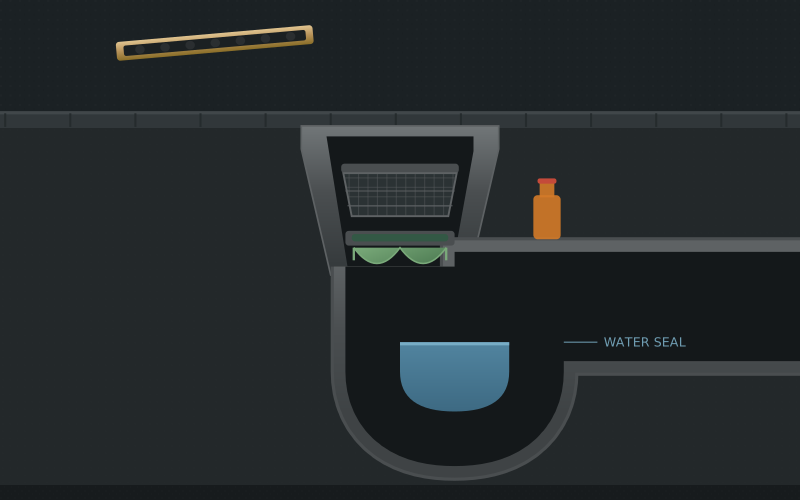 DON'T
Don't pour chemicals into standing water. It just sits there.
Before you close the page
Before you open the trap
A trap plug holds back the contents of everything upstream. Bucket underneath, towel around it, gloves on.
Auger discipline
Feed slowly and let the head do the work. Spinning it fast just wraps hair tighter around the spring.
When it is a call-out
Multiple drains, sewage smell in the house, or a blockage that returns in days. Three strikes, call someone.
Related guides
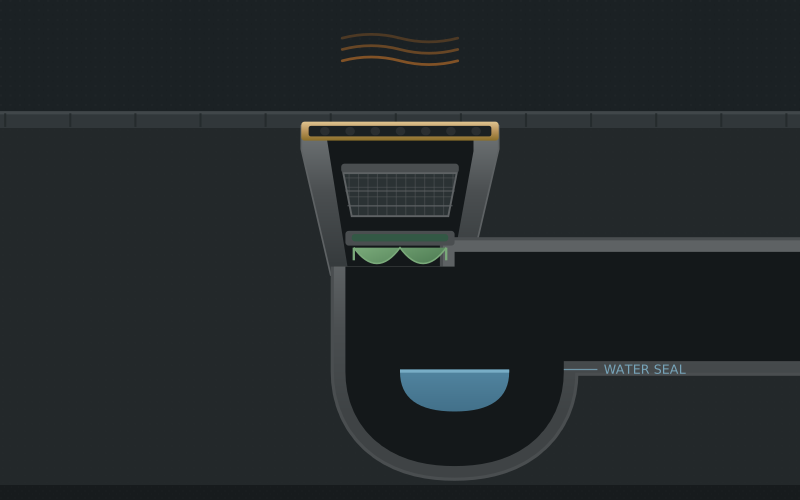
Gurgling Drains: Why They Happen and How to Stop Them
The gulp is air being pulled through water. Find out where the air should have come from, and the noise stops.
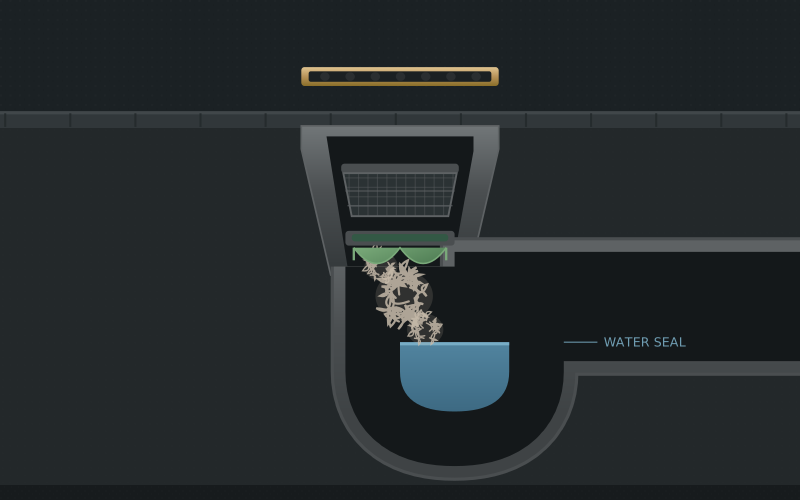
How to Clear a Hair Clog Without Chemicals (Step by Step)
Hair does not dissolve. Chemicals turn it into a jelly that is harder to hook out, which is why the physical route wins every time.
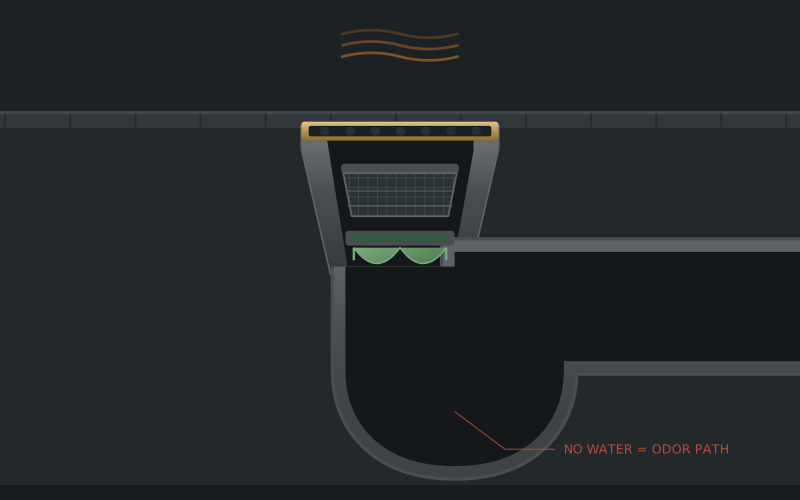
Smell but No Clog: How to Fix a Dry or Broken Drain Seal
The drain runs perfectly and still stinks. That narrows it to one part, and you can test it with a cup of water in under a minute.
Safety
Wear gloves and eye protection. Ventilate the room. Never mix chemical cleaners — bleach plus caustic cleaner releases chlorine gas. Trap contents are grey water and may carry bacteria. If water backs up in more than one drain, or you smell gas, stop and call a licensed plumber.